
ATTEND
Clinical documentation software for psychiatry practices. It turns the referral letter and the doctor's diagnosis into the reports a practice must produce, in the practice's own templates.
The documents it produces
Progress reports
The numbered report a scheme requires for each authorised admission. Reports 1, 2 and 3 are distinct documents with their own templates — the number printed on the report is what the scheme reads — and ATTEND keeps them in sequence.
Hospital admission reports
Completed at admission from the referral letter and the diagnosis, on the hospital's or the practice's form.
Medical-scheme admission forms
The scheme's own admission form for a funded stay, recognised from its header and completed in place. Where a scheme's form replaces the hospital's, ATTEND produces the scheme's.
How a report is produced
- The referral letter is scanned or uploaded. ATTEND reads it itself, on ATTEND's own infrastructure; no page is sent to a third-party service.
- The doctor records the diagnosis.
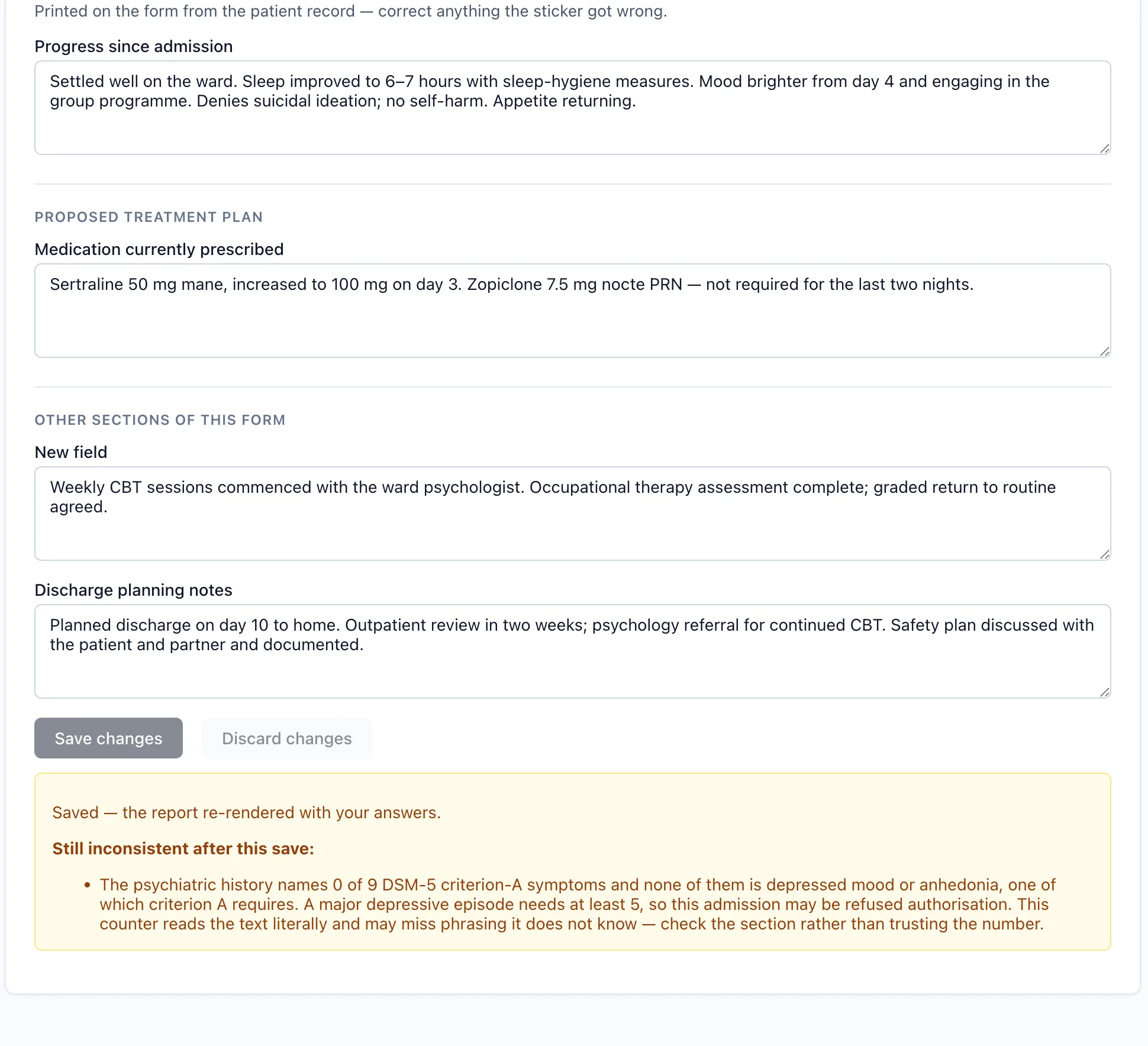
- ATTEND completes the practice's template for the report that is due and shows the draft with every field editable.
- The doctor edits and signs off. The PDF carries a unique identifier in its footer and remains editable in Adobe Acrobat.
- Corrections are queued for review. Once approved, they change how the next draft is written.
Templates are the practice's own
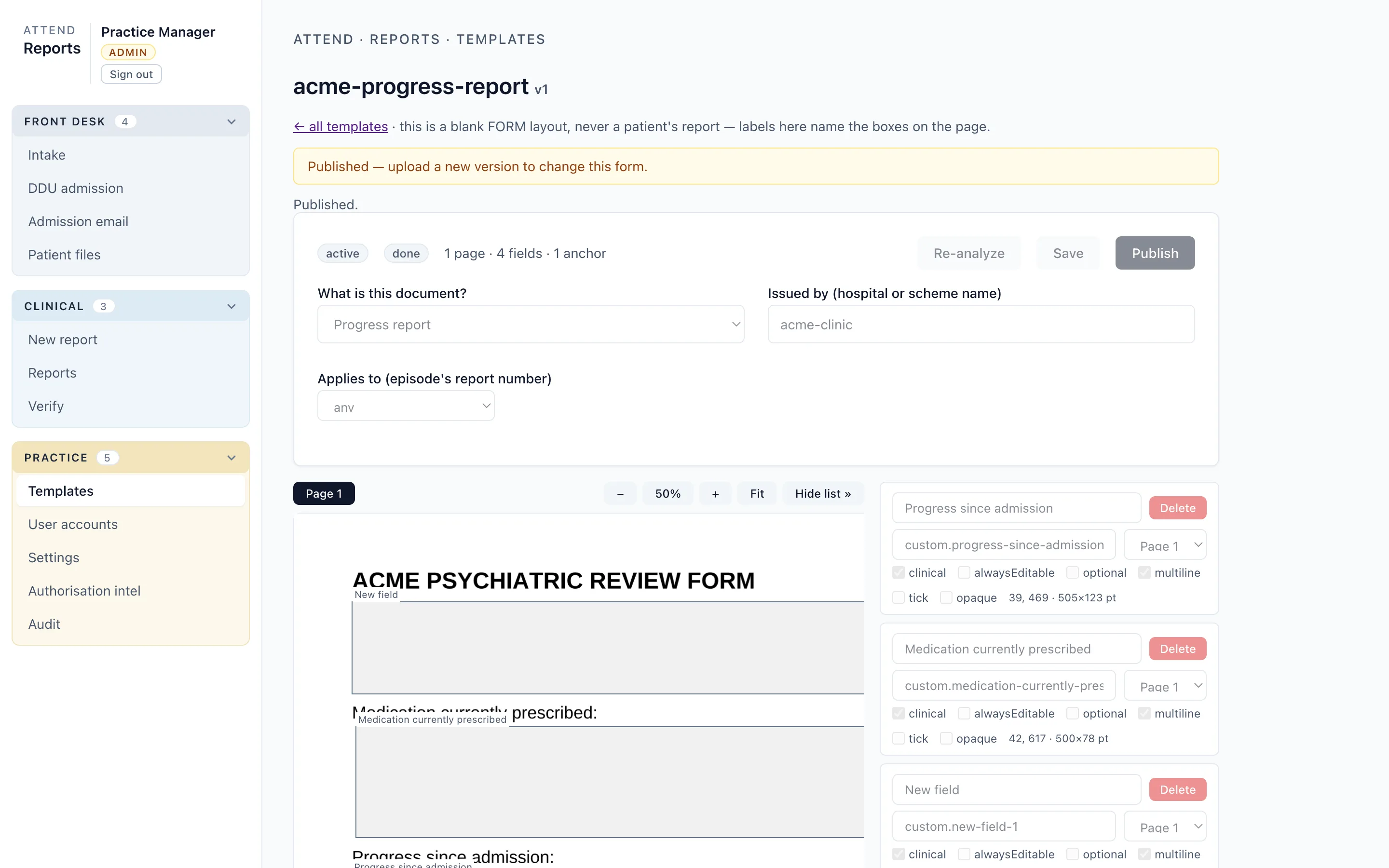
An administrator uploads the practice's blank form. ATTEND analyses it locally, proposes the fields, and the administrator confirms or adjusts them in a visual editor before publishing. Publishing a new version supersedes the old one. No template is shared between practices.
What ATTEND deliberately does not do
Send patient content to cloud AI
Drafting is deterministic template completion, not a language model writing clinical prose. The one exception is a single optional step that reads a hospital label with a vision service; it runs only where the patient has given explicit consent, recorded in ATTEND, and is off otherwise.
Email patient content
Staff receive sign-in credentials by email. Patient content never travels by email.
Track its users
There is no analytics, telemetry or crash reporting inside ATTEND. Logs record which fields were touched, never what they contained.
Lock a practice out
There is no licensing switch in the software. Billing is handled outside the system, and return of data on termination is written into every operator agreement.
Who it is for
Private psychiatry practices in South Africa with admitted patients, where the weekly reporting load is real. Pricing is per practice and available on request.